




What are the main components of a Directional Drilling Rig?
 Jan 15, 2026|
 A directional drilling rig is a complex piece of equipment used in various industries, especially in the oil and gas sector, as well as in utility installation projects where horizontal directional drilling (HDD) is required. As a reputable directional drilling rig supplier, I am well - versed in the main components that make up these powerful machines. Understanding these components is crucial for operators, maintenance crews, and potential buyers as it provides insights into how the rig functions, its capabilities, and how to ensure its proper operation and longevity.
Power System
The power system is the heart of a directional drilling rig. It provides the energy needed to drive all the other components of the rig. Most modern directional drilling rigs are powered by diesel engines, which are known for their high torque and reliability. These engines are specifically designed to handle the heavy loads and continuous operation required in drilling operations.

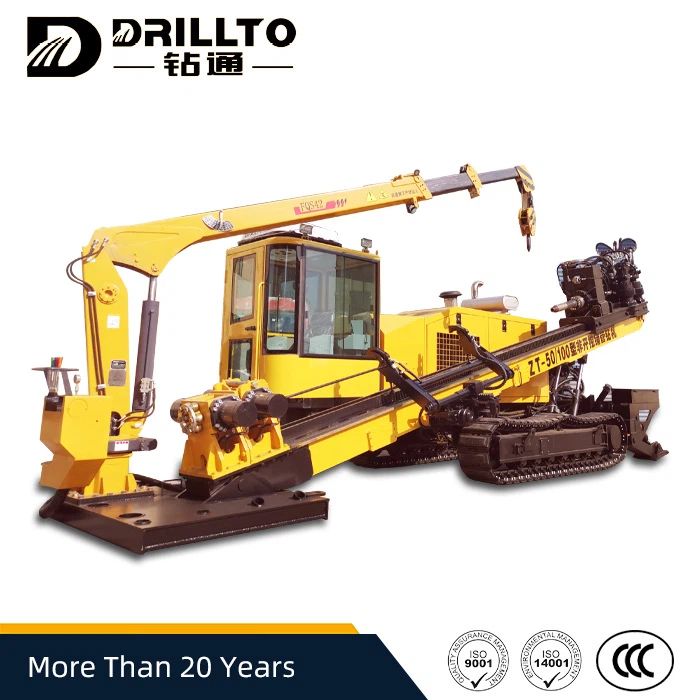
The power output of the diesel engine is transferred to the various systems of the drilling rig through a transmission system. This can be a mechanical, hydraulic, or electrical transmission, depending on the design of the rig. Hydraulic transmissions are particularly popular in directional drilling rigs because they offer precise control over the drilling process, allowing for smooth and accurate operation.
The power system also includes an alternator or generator, which produces electrical power for the rig's control systems, lighting, and other electrical components. In addition, it is often equipped with a cooling system to prevent the engine from overheating during long - term operation.
Hoisting System
The hoisting system is responsible for lifting and lowering the drill string, which consists of drill pipes, drill collars, and the drill bit. It includes a tower or mast, which is the vertical structure that supports the hoisting equipment. The mast is designed to be strong enough to withstand the high forces exerted during the hoisting process.
At the top of the mast, there is a crown block, which is a set of pulleys that guide the drilling line. The drilling line is a heavy - duty cable that is wound around the drawworks, which is the mechanism responsible for reeling in and letting out the line. The drawworks is powered by the rig's power system and is controlled by the driller in the control cabin.
The traveling block is another key component of the hoisting system. It is connected to the drilling line and moves up and down the mast. The drill string is attached to the traveling block, allowing it to be lifted and lowered as needed.
Rotary System
The rotary system is responsible for rotating the drill string and the drill bit. It consists of a rotary table or a top - drive system.
The rotary table is a large, circular platform located at the base of the drill floor. It is equipped with a square or hexagonal opening in the center, through which the kelly (a long, square or hexagonal pipe) passes. The kelly is connected to the drill string and is used to transmit the rotational force from the rotary table to the drill bit. The kelly is also responsible for providing a means of adding or removing drill pipes from the drill string.
In recent years, top - drive systems have become increasingly popular in directional drilling rigs. A top - drive system is mounted on the traveling block and can rotate the drill string directly. This eliminates the need for a kelly and allows for more efficient and safer drilling operations. The top - drive system can also be used to add or remove drill pipes more quickly, reducing the time required for tripping (the process of adding or removing drill pipes from the drill string).
Circulating System
The circulating system plays a vital role in the drilling process. Its main function is to circulate drilling fluid, also known as mud, through the drill string and the wellbore. The drilling fluid serves several important purposes, including cooling and lubricating the drill bit, carrying cuttings (the rock fragments created by the drill bit) to the surface, and maintaining the stability of the wellbore.
The circulating system consists of a mud pump, which is responsible for pumping the drilling fluid from the mud pit into the drill string. The mud pump is typically a high - pressure pump that can generate the force needed to push the fluid through the long drill string and out of the drill bit.
Once the drilling fluid has circulated through the drill string and the wellbore, it returns to the surface carrying the cuttings. At the surface, the drilling fluid passes through a series of shale shakers, which are screens that separate the cuttings from the fluid. The cleaned fluid is then returned to the mud pit for reuse.
Control System
The control system is the nerve center of the directional drilling rig. It allows the driller to monitor and control all the major components of the rig, including the power system, hoisting system, rotary system, and circulating system.
Modern control systems are often computer - based and use advanced sensors and instrumentation to provide real - time data on the drilling process. This data can include parameters such as drill bit depth, drilling pressure, rotational speed, and mud flow rate. The driller can use this information to make adjustments to the drilling process as needed, ensuring optimal performance and safety.
The control cabin is where the driller sits and operates the control system. It is equipped with a variety of controls, including joysticks, buttons, and monitors, which allow the driller to manage all aspects of the drilling operation.
Directional Control System
One of the unique features of a directional drilling rig is its ability to drill at an angle or in a curved path. This is made possible by the directional control system, which includes a downhole motor and a measurement - while - drilling (MWD) or logging - while - drilling (LWD) tool.
The downhole motor is a positive - displacement motor that is located near the drill bit. It uses the pressure of the drilling fluid to generate rotational power, allowing the drill bit to rotate independently of the drill string. This enables the driller to control the direction of the drill bit by adjusting the orientation of the downhole motor.
The MWD or LWD tool is a device that is placed in the drill string near the drill bit. It measures various parameters, such as the inclination, azimuth, and tool face of the drill bit, and transmits this information to the surface in real - time. The driller can use this data to make adjustments to the drilling path as needed.
Auxiliary Equipment
In addition to the main components mentioned above, a directional drilling rig also includes a variety of auxiliary equipment. This includes equipment for handling the drill pipes, such as pipe racks and pipe handlers. Pipe racks are used to store the drill pipes, while pipe handlers are used to move the pipes to and from the drill floor.
There is also equipment for maintaining the rig, such as lubrication systems, hydraulic fluid reservoirs, and air compressors. These systems ensure that the various components of the rig are properly lubricated and maintained, reducing wear and tear and extending the lifespan of the equipment.
As a supplier of Horizontal Directional Drilling Rig HDD Machine, Horizontal Directional Machine and Trenchless Horizontal Directional Drill Rig Machine, we understand the importance of each component in the overall performance of the drilling rig. Our rigs are designed to be reliable, efficient, and easy to operate, with high - quality components that are built to last.
If you are in the market for a directional drilling rig, we invite you to contact us to discuss your specific needs. Our team of experts can provide you with detailed information about our products, including their features, specifications, and pricing. We are committed to providing our customers with the best possible solutions for their drilling projects.
References
- API RP 7G, "Recommended Practice for Drilling Rig Inspection"
- IADC (International Association of Drilling Contractors) publications on drilling rig technology
- Various technical manuals from leading drilling rig manufacturers.