




What special considerations are there when using an HDD Drilling Machine in hot weather?
 Oct 13, 2026|
 Hey guys, if you've ever ran an HDD job in 90°F (32°C) + heat, you know it's way different from drilling in that perfect 65°F spring weather. I've been selling HDD Drilling Machine to job sites across the Southwest and Southeast for over 10 years, and hot weather is the #1 thing that catches new crews off guard. Most guys show up, fire up their horizontal directional drill, and just assume it'll work like it does in cooler months-but that's how you end up with a dead rig mid-pull, mud that's too thin, or parts that seize up faster than you can say "we need a new pump." Today I'm breaking down the real, on-site stuff you need to watch for when running your HDD drilling machine in hot weather-no fancy textbook jargon, just the stuff I've seen save (or cost) crews thousands of dollars.
First off, let's talk about the machine itself, starting with engine and hydraulic systems. This is the big one because heat kills oil and pressure way faster than cold. Most HDD rigs are built with temperature sensors, but a lot of crews ignore those until the warning light is blaring and they're stuck. In hot weather, ambient temps make the engine work harder to cool itself-your horizontal directional drill's radiator can't pull enough heat out when the air around it is already warm. I've seen guys with the 100A Horizontal Directional Drilling Machine get 20 minutes deep into a pull before the hydraulic temp hits 195°F, and then the rig goes into limp mode. Limp mode is the worst, by the way-you can't pull reamer, you can't adjust your torque, you're just sitting there in the sun drinking warm soda while your mud pit cooks.
Why does hydraulic heat matter so much? Hydraulic oil's job is to transfer pressure to the drill head, motor, and track systems. When it gets too hot, its viscosity drops-thins out, like motor oil left in the sun. That means pressure leaks out through hoses and seals instead of getting where it needs to go. I had a customer last summer who was pulling a 12-inch HDPE line under a highway in Texas; his hydraulic oil got so thin he lost 30% of his pulling force mid-job. He had to shut down for 4 hours while he waited for the oil to cool, and that job's late fee cost him $2,000 alone.
So what's the fix here for any HDD drilling machine, whether it's a small 100A rig or a heavy-duty Large Torsion HDD Drilling Machine? First, double-check your cooling system before you start the day. Clean the radiator fins-bugs, dirt, and construction dust clog them up, and in hot weather that's death. I see guys skip this all the time; they just spray a quick burst from the hose, but you need to get in there with a soft brush if the fins are caked. Next, keep an eye on oil levels, but not just the minimum/max on the dipstick. In hot weather, oil expands, so if you fill it right to max when it's cool, it'll be overfull by midday when it's hot. Overfull hydraulic oil traps heat, so shoot for the middle of the sight glass when the rig's cold. And if you're using a rig that's a couple years old, check for worn seals or leaky hoses-those get worse when it's hot, and hot oil spraying on hot engine parts is a fire risk, too.

Next up-mud systems. Oh man, mud in hot weather is a whole separate problem. Most HDD crews use bentonite or polymer mud to keep the bore open, cool the drill bit, and carry cuttings back up. When it's hot, mud dries out super fast-your mix that was perfect at 7 a.m. can be too thin by 10 a.m. because the sun evaporates the water out of it. Thin mud can't hold the bore, so you get collapse, which means you have to ream the whole hole again. Or worse, the drill bit gets stuck because there's not enough mud to cool it, and you're fishing for a lost bit for days.
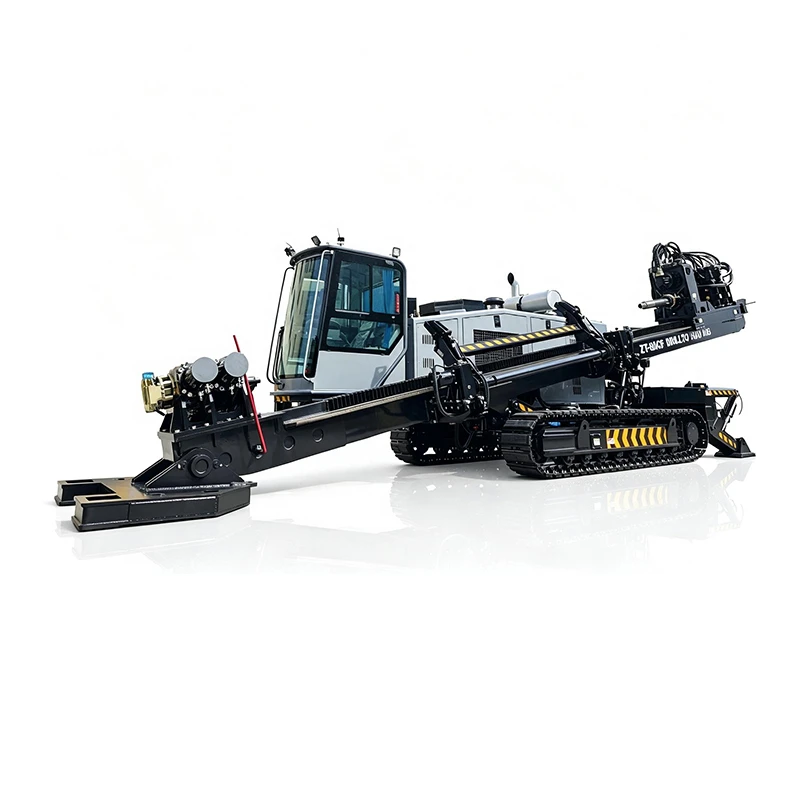
I had another customer a year ago in Arizona-he was running a ZT-80CF Horizontal Directional Drilling Machine on a residential water line job, and he used standard bentonite mix. By 11 a.m., the mud was so thin that the bore collapsed 20 feet before the exit point. He had to excavate the entire entry area, re-drill the hole at a different angle, and lost 3 days of work. The fix here is simple: adjust your mud mix for heat. Add a little extra bentonite or polymer when you're mixing in the morning, and test the viscosity throughout the day. I carry a simple mud funnel test in my truck-takes 30 seconds to check how thick the mud is, and you can tweak it on the fly. Also, keep your mud tanks in the shade if you can. I know jobsites don't always have that, but if you can throw a tarp over the tank or park it next to a truck to block the sun, it slows down evaporation. Another trick: some guys add a small amount of a lubricant additive to the mud in hot weather-it reduces friction between the drill string and the bore wall, which takes less stress on your HDD drilling machine and helps keep everything moving smoothly.
Then there's the drill string itself-those metal pipes running through the bore. Hot weather makes metal expand, so if your drill string is connected tight when it's cool, by midday when it's heated up, it can get too tight and even seize in the bore. I've seen guys try to pull a drill string that's locked up because they didn't account for expansion; they had to cut the string in the bore and pull half out, which is a huge headache. Also, metal pipes in hot sun get really hot, and when you lower them into the mud, the sudden temperature change can cause stress cracks. So store your drill string in the shade when you're not using it, and if you have to connect pipes in direct sun, don't crank the connections as tight as you would in cool weather. A good rule of thumb: hand-tighten with a pipe wrench, then give it one extra turn max. I know it's tempting to make them super tight to avoid leaks, but leaks in hot mud are less of a problem than a seized string.
Wait, and let's not forget about the crew running the machine. This might not seem like a machine-related consideration, but if your operator is overheated, they're going to make mistakes. I've had guys call me at 2 p.m. panicking because they messed up the pull speed on their Horizontal Directional Drilling Rig and damaged the HDPE line-all because they were so hot they weren't paying attention. Make sure your jobsite has shaded breaks, plenty of cold water (not ice water-sudden cold can cause cramping), and even a small fan for the operator's station. A lot of newer HDD drilling machines have enclosed cabs with AC, but if yours doesn't, invest in a portable evaporative cooler for the operator area. It's way cheaper than having to fix a messed-up pull every week.
Also, let's talk about unexpected downtime in hot weather. Things happen faster when it's hot-hoses burst, belts slip, batteries die because the engine works harder. I tell all my customers to carry extra parts for their horizontal directional drill in hot weather: extra hydraulic hoses, a spare fan belt, a charged jump box, and some extra drill bit parts. Last summer, a guy in New Mexico had a hose burst on his Large Torsion HDD Drilling Machine at 3 p.m., and he didn't have a spare hose. He had to wait 3 hours for a part to be delivered, and that cost him a $5,000 job penalty. Now he keeps three extra hoses on his truck at all times, and he hasn't had that problem since.
Wait, one more thing that a lot of guys miss: ground temperature. When it's 100°F outside, the top few feet of soil get just as hot, which can affect the drill path. Shallow bores (under 10 feet) are the worst because the hot soil makes it harder to control the drill head direction. The drill bit will tend to drift, so you have to adjust your steering parameters more often. I recommend slowing down your pull speed a little in hot, shallow bores-going too fast makes the bit react to the hot soil, and you end up with a crooked line that doesn't meet specs. That's a big deal for residential jobs where the line has to go straight to the house; a crooked line means you have to re-drill, which is a waste of time and money.
Let me wrap this up with a few quick do's and don'ts for anyone running an HDD drilling machine in hot weather: Do clean your cooling system daily, adjust your mud mix regularly, keep your drill string in the shade, and make sure your crew is hydrated. Don't ignore temperature warning lights, fill hydraulic oil to max when cold, crank drill string connections too tight, or skip carrying extra parts.
If you're in the market for an HDD drilling machine that's built to handle hot, heavy jobs-whether you need a compact 100A model for small residential jobs, a Large Torsion HDD Drilling Machine for big commercial projects, or a ZT-80CF Horizontal Directional Drilling Machine for mid-sized bores-check out our lineup at our website. Our Horizontal Directional Drilling Rig models are designed with upgraded cooling systems that handle high ambient temps way better than standard rigs, and we've got all the parts and support you need to keep your jobs running smoothly even in the hottest months. If you have questions about which rig is right for your hot-weather projects, or need help troubleshooting a current issue, reach out to our team. We've been working with HDD crews for years, and we know exactly how to help you avoid the headaches that come with drilling in heat.