




Can a trenchless drilling machine be used for cable installation?
 Oct 12, 2026|
 If you've ever had to dig up a street, sidewalk, or backyard just to run a new cable-whether for internet, power, or telecom-you know how big of a hassle it is. The mess, the cost, the time delays… it's enough to make anyone want to throw their hands up. But here's the thing: trenchless drilling machines exist for a reason, and lately, we've been getting asked nonstop: Can these actually be used for cable installation? The short answer is YES-but there's a bit more nuance to it than just "stick a drill in the ground and pull cable through." As a supplier of trenchless drilling equipment, I've worked with contractors, utility companies, and even small telecom teams to make this work, so let's break it down like we're chatting over a coffee (no stuffy jargon, promise).

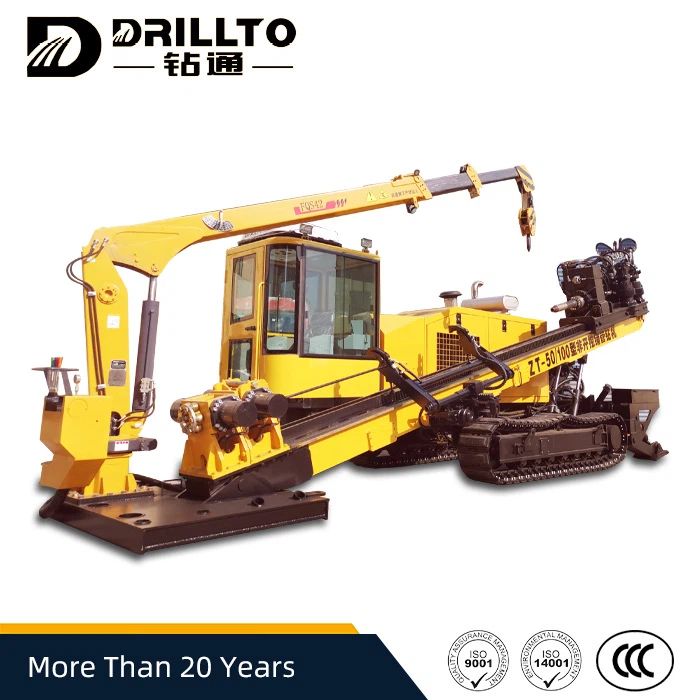
First, let's get on the same page about what a trenchless drilling machine even is. It's a piece of gear designed to create underground pathways without digging huge trenches, right? The most common type you'll hear about is a horizontal directional drilling (HDD) rig-think of it as a steerable drill that burrows horizontally underground, following a pre-planned path. Wait, and before we go further, if you want to check out the basics, you can look at the Trenchless Drilling Machine page on our site-we keep it simple there, no fancy charts.
Now, why would anyone bother using this for cable instead of traditional digging? Let's list the obvious wins: first, it's way less disruptive. If you're laying cable under a busy highway, a school playground, or a neighborhood with mature trees, digging a trench would mean closing roads, annoying residents, and damaging property. Trenchless drilling skips all that-you only need two small entry/exit pits, so you move along with way fewer headaches. Second, it's faster. For projects over 100 feet or so, a good HDD rig can do the work in a fraction of the time it takes to dig, lay cable, and backfill. Third, it's better for the environment-no excavated soil to dispose of, less soil compaction, and fewer risks of cutting existing pipes or utilities (as long as you do the pre-drill locates right).
But here's the catch: not every trenchless machine works for every cable job. Let's talk about the different types and what they're good for. For example, if you're doing a small residential job-like laying a fiber line from your house to the street-you don't need a massive rig. We've got mini HDD machines for that, they're lightweight, easy to move with a pickup truck, and perfect for short, shallow runs. But if you're working on a major project, like laying high-voltage power cables under a river or a major intercity road, you need something with more power-like our 140ton horizontal directional drilling machine, which is built to handle longer, deeper paths (side note, that's here if you want to see specs).
Wait, let's not forget the actual process of running cable through a trenchless drill, because that's where a lot of people get confused. It's not just drilling a hole and shoving cable through-you have to use a "reamer" (a tool that widens the drilled path) and a pulling head to connect the cable to the drill string. The steps are roughly: first, you survey the area to make sure there are no existing utilities or underground obstacles (we always recommend using a utility locator, it saves so much hassle). Then, you set up the drill rig at the entry pit, drill a small pilot hole along the path you want-this is where the steerability comes in, so you can avoid things like rock beds or old sewer lines. Once the pilot hole is done, you pull a reamer back through the hole to make it big enough for the cable (or sometimes multiple cables). Then, you attach the cable to the back of the reamer and pull it through the widened path. That's it, basically-though every project has little quirks, like adjusting the drilling fluid (yes, fluid!) to keep the hole from collapsing, especially in sandy soil.
Speaking of drilling fluid, that's a key part of making this work for cable installation. The fluid (usually a mix of water and bentonite clay) does two main things: it lubricates the drill bit so it doesn't get stuck, and it keeps the sides of the drilled hole from caving in. If you don't get the fluid mix right, the hole collapses, and you end up having to start over. For small residential cable jobs, you can usually use a simpler fluid mix, but for bigger projects, we work with teams to adjust the mix based on the soil type-something we cover on our New Designed HDD Machine page, since our newer rigs have automatic fluid mixing systems that take the guesswork out of it.
Now, let's get real about the limits. Trenchless drilling isn't for every cable job. If you're laying cable in super shallow soil (like under a flower bed that's only a foot deep), a mini trencher is actually cheaper and faster than setting up a drill. Or if you're in rock that's too hard-wait, no, actually, some HDD rigs can handle hard rock, but it requires specialized bits and slower drilling, which might not be worth it for a small job. Also, there's the cost factor: a trenchless drilling machine is more expensive to rent or buy than a trencher, so for tiny, short runs, it might not make financial sense. But for any job that's over 50 feet, or in an area where digging is restricted, it's a no-brainer.
I want to share a recent example to make this concrete. A few months back, we worked with a small telecom contractor who was laying fiber cables to a new housing development in a city with a lot of old, narrow streets. If they'd used traditional trenching, they would have had to close each street for a full day per block, which would have pissed off the local business owners and delayed the project by months. Instead, they used a compact Horizontal Directional Machine-our mini model, actually-and got the whole project done in half the time, with zero street closures. The only mess was two small entry/exit pits at each end of the blocks, which they filled in overnight. The homeowners didn't even notice most of the work, and the contractor saved over $20k in rework and delay fees. That's exactly why this works.
Another thing people ask: is there a difference between trenchless machines for pipe vs. cable installation? The core tech is the same-they both drill underground paths-but the accessories are different. For pipe, you pull the pipe itself through the hole, but for cable, you use a pulling head that attaches to the cable's strength member (the part that keeps it from breaking when you pull it) and runs it through the reamed hole. Also, since cable is smaller and more flexible than most pipes, the reamer size doesn't need to be as big, which saves time on the reaming step. That's something we've optimized in our rigs-our Horizontal Directional Drilling Rig HDD Machine has adjustable reamer speeds, so you can go faster for cable than you would for larger pipe.
Now, let's talk about mistakes to avoid when using a trenchless machine for cable. First, not doing a thorough utility locate. Even if you have a map of underground lines, old lines might not be on the map, so using a good utility locator before you start drilling is non-negotiable. We've seen teams hit a gas line because they skipped this step, and that's a nightmare-costly, dangerous, and delays the project for weeks. Second, not sizing the right machine. A mini rig is great for short residential runs, but if you try to use it for a 500-foot run under a river, you'll burn out the motor and waste time. Third, not testing the drilling fluid before you start. Soil type changes a lot even over a short distance, so test the fluid mix in a small area first to make sure it keeps the hole open.
Wait, what about depth? Can you drill as deep as needed for cable? The answer is yes, up to a point. Most standard HDD rigs can drill up to 60 feet deep, and heavy-duty models can go even deeper-like our 140ton model, which can handle depths over 100 feet. That's perfect for running cable under roads, rivers, or other infrastructure where you don't want the cable to be at risk of being dug up later. For example, if you're laying power cables under a major highway, you need them to be deep enough that road crews won't hit them when they do maintenance, so a deeper drill is exactly what you need.
Let's also address the elephant in the room: is this method reliable? We've been in the trenchless drilling business for years, and we've helped lay thousands of miles of cable with these machines. The key is choosing the right equipment for the job, working with a team that knows how to operate it, and following the proper steps. When done correctly, the cable installation is just as reliable as if you dug a trench-sometimes even more, because the cable is protected from surface damage (like foot traffic, construction, or weather).
Now, if you're a contractor or utility company wondering if this is the right approach for your next cable project, here's a quick checklist: 1) Is the area you're working in restricted for digging (busy streets, protected land, etc.)? 2) Is the run longer than 50 feet? 3) Is the soil type not super hard rock or super shallow? If you answered yes to two or more of these, then a trenchless drilling machine is probably a great fit.
If you're ready to explore your options, we have a range of trenchless equipment to match every project size-from mini rigs for residential jobs to heavy-duty models for large-scale infrastructure. No matter what you need, we can help you pick the right machine, and even offer tips on operation and accessories to make your cable installation go smoothly.
If you're interested in discussing your specific project or learning more, feel free to reach out for procurement consultation.